Best Home Upgrades for Resale in Hampton Roads (2027)
The upgrades that pay back best before you sell in Hampton Roads are small, visible and cheap: a new garage door, a new front door, fresh neutral paint, a cleaned-up exterior and, if the kitchen is dated, a modest refresh rather than a gut job. The expensive projects pay back least. In the 2025 Cost vs. Value report (national averages), a garage door replacement recouped 268% of its cost at resale, while a midrange primary-suite addition recouped about 32%. Homeowners in Virginia Beach, Chesapeake, Norfolk, and Suffolk ask us this every week, so here is how we would plan a 2027 sale.
Coastal Virginia adds its own layer: salt air and humidity age roofs, siding and crawlspaces, many lots sit in FEMA flood zones with stricter permit rules, and FHA and VA appraisals flag deferred maintenance. Below: what the resale data says, what changes locally, and the permit and flood rules to check before you hire anyone.
Key takeaways at a glance
- Curb appeal leads. Garage door and steel entry door replacements topped the 2025 Cost vs. Value report (268% and 216% recouped, national averages). Paint was the top pre-listing project Realtors recommended in NAR's 2025 Remodeling Impact Report.
- Refresh, don't gut. A midrange minor kitchen remodel recouped 113% nationally in 2025; a midrange major kitchen remodel recouped 51%.
- Coastal wear matters. Inspectors and buyers look hard at roofs, HVAC, siding and crawlspace moisture. Fix what is failing before you polish what is dated.
- Flood zones change the rules. In a FEMA Special Flood Hazard Area, Virginia Beach requires a permit for all construction and development, and work costing 50% or more of the building's value triggers full floodplain compliance (Norfolk counts that over ten years).
- Pools and additions are for you, not the next buyer. A midrange primary-suite addition recouped about 32% in the 2025 Cost vs. Value data, and neither major report measures pools.
In this guide
- Key takeaways at a glance
- Why Hampton Roads ROI is different
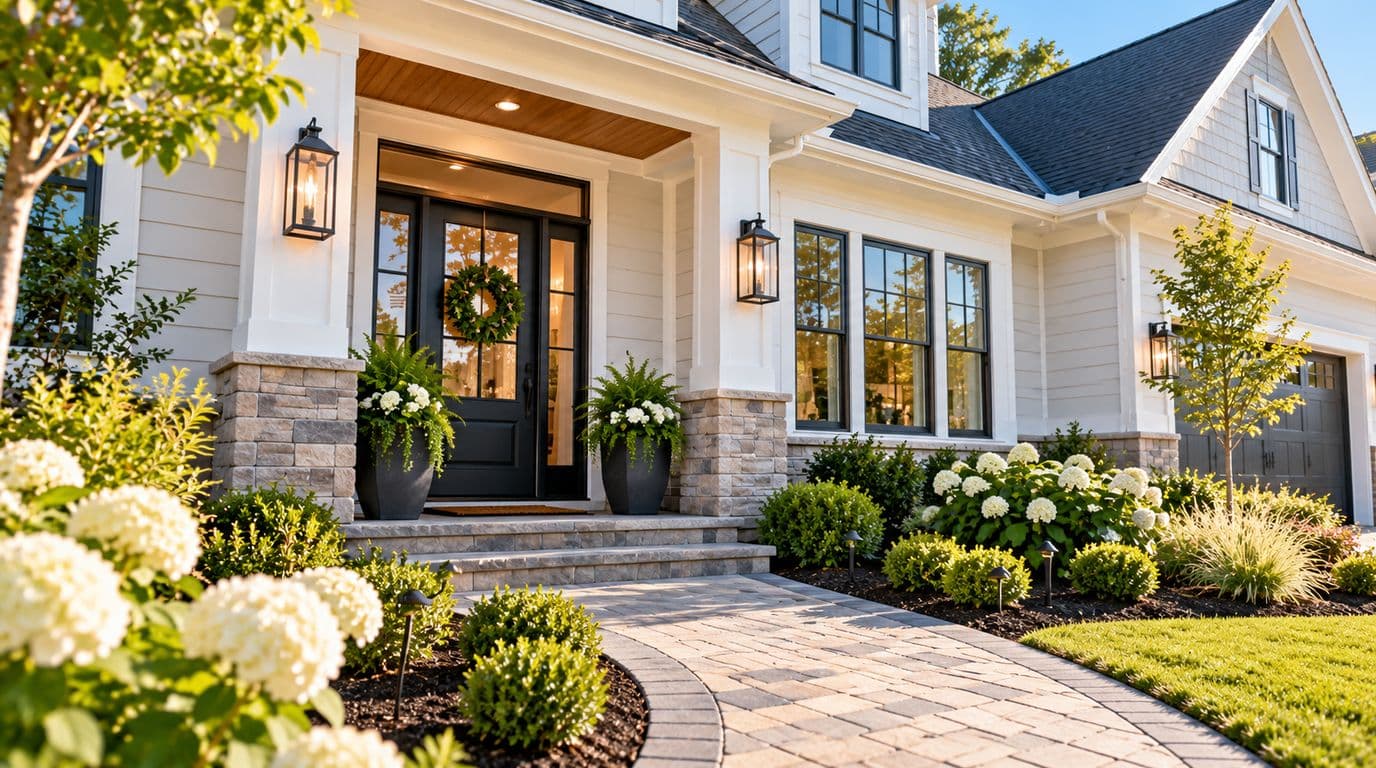
- Exterior & curb appeal upgrades
- Kitchen upgrades that pay back
- Bathroom upgrades that pay back
- HVAC, roof & storm-readiness upgrades
- Flood-zone homes: permits, the 50% rule and flood vents
- Outdoor living & backyard upgrades
- Renovations to avoid before selling
- When to renovate vs. sell as-is
- FAQ
- Sources & further reading
In Hampton Roads, the cheapest renovations usually return the most. The expensive ones (pools, primary-suite additions, designer kitchens) are best done for yourself, not for the next buyer.
Why Hampton Roads renovation ROI is different from the national average
The two resale studies most people quote are national: the Cost vs. Value report (Zonda, published with the Journal of Light Construction) and NAR's Remodeling Impact Report (with the National Association of the Remodeling Industry). They use different methods and often disagree (a minor kitchen upgrade recovers 113% in one and 60% in the other), so read them as averages, not promises. Three local realities shift the picture:
- Appraisal standards bite. FHA and VA appraisals check minimum property requirements, and in homes built before 1978, FHA requires defective (peeling, chipping) paint to be corrected. A home that is clean and sound appraises with fewer conditions.
- The climate is hard on exteriors. Salt air, summer humidity and hurricane season wear roofs, HVAC equipment, siding and crawlspaces. Buyers and their inspectors know it and price for it.
- Homes move quickly, so condition and price decide. In September 2026, median days on market ran from 17 in Virginia Beach to 21 in Chesapeake, Norfolk and Portsmouth, 24 in Hampton, 28 in Newport News and 31 in Suffolk (VaHome analysis of REIN MLS data, September 2026). Buyers compare a lot of homes in a short window, and an over-improved home priced above its comps tends to sit. Check your city on our Hampton Roads market reports.
Exterior & curb appeal upgrades: where Hampton Roads sellers win
If you do nothing else, do these four things. They are the least expensive projects on this list and the ones buyers see first, in person and in listing photos.
1. Power wash and clean
Coastal humidity grows mildew on siding, roofs, sidewalks, decks and fences. A professional wash changes how most homes look and shows you where the real exterior problems are before you spend money elsewhere.
2. Neutral exterior paint or trim refresh
If a full repaint isn't in the budget, repaint the front door, shutters and trim in current neutrals (Sherwin-Williams Repose Gray, Agreeable Gray or Snowbound, with Tricorn Black for accents). Painting the entire home was the top project Realtors recommended sellers do before listing in NAR's 2025 report (50% of respondents). In a pre-1978 home, hire a firm that is EPA lead-safe certified for any work that disturbs old paint.
3. New garage door
Garage door replacement led the 2025 Cost vs. Value report: about $4,672 national average job cost against about $12,507 of resale value, or 268% recouped. That jumped from about 194% in the 2024 edition, so read it as "reliably strong," not guaranteed. Near open water, ask for a wind-rated door.
4. Landscaping refresh
Mulch, edge the beds, trim overgrowth and plant annuals that tolerate our humid summers (begonias, vinca, marigolds). Skip expensive specimen trees; buyers rarely pay for them.
Fix the front door first.
If you can do exactly one thing, replace or refinish the front door. A new steel entry door recouped 216% in the 2025 Cost vs. Value national averages (about $2,435 job cost) and 100% in NAR's 2025 Remodeling Impact Report, the top cost recovery in that study. Even paint and new hardware (handle, kickplate, smart deadbolt) improve the first impression.
Kitchen upgrades that pay back in Hampton Roads
The kitchen sells the home, but selling doesn't mean luxury. Hampton Roads buyers respond to clean, modern, neutral kitchens, not designer finishes the neighborhood comps can't support. In NAR's 2025 report, 48% of Realtors said they had seen more buyer demand for kitchen upgrades over the prior two years, the top answer.
Minor kitchen refresh
The 2025 Cost vs. Value midrange minor kitchen remodel (national average job cost about $28,458) recouped 113%. NAR's 2025 report puts a minor kitchen upgrade at 60%. Either way, it beats a full remodel. What we would do:
- Cabinet refacing or repainting instead of replacing (white, off-white or medium gray)
- Quartz countertops on the existing cabinet boxes
- Matching appliances, stainless at minimum on the visible side
- Modern hardware in one consistent finish
- A tile backsplash, subway or simple contemporary
- Updated lighting: under-cabinet LEDs plus a new pendant or center fixture
Major kitchen remodel
The 2025 Cost vs. Value midrange major kitchen remodel averaged about $82,793 nationally and recouped 51%. It makes sense if you will live with it for a few years, or if comparable homes in your price range all have fully remodeled kitchens.
Don't pick the most expensive finishes for a sale.
The median Newport News home sold for $309,950 in September 2026 (VaHome analysis of REIN MLS data, September 2026). A $90k kitchen with imported tile and pro-grade appliances in a home at that price will not be valued at $90k by the appraiser or the buyer. Match the finish level to the recent sales in your neighborhood.
Bathroom upgrades that pay back
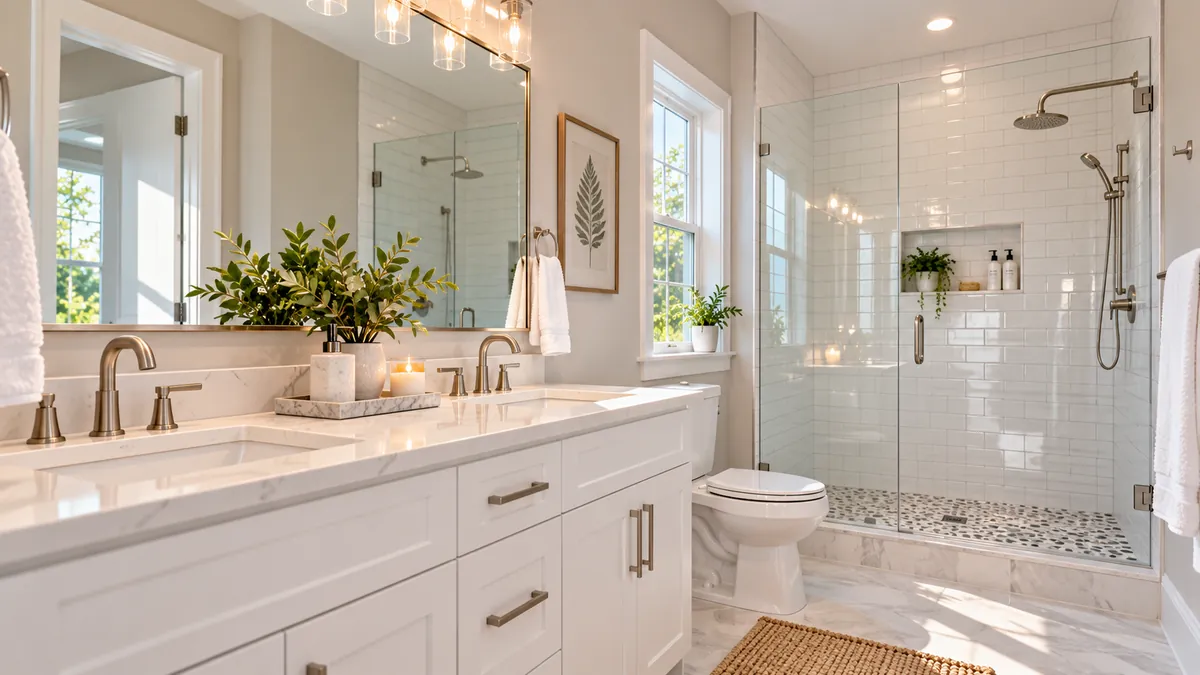
The primary bath drives more buyer reaction than the guest bath. A midrange bath remodel recouped 80% in the 2025 Cost vs. Value national averages (about $26,138 job cost); NAR's 2025 report puts a bathroom renovation at 50%. Targeted refreshes usually beat full gut remodels for resale.
Primary bath refresh
- Re-glaze or replace the tub or shower surround
- New vanity with a quartz top and a modern faucet
- New mirror and lighting
- New large-format porcelain tile floor
- Matching fixtures throughout (matte black or brushed nickel)
Replacing a sink, toilet or faucet in the same spot generally doesn't need a permit; moving plumbing does. Chesapeake's homeowner permit guide lists exactly that split.
Guest bath
Keep it small: new vanity, mirror, lighting, paint and hardware. Skip the gut remodel; a guest bath rarely moves the price the way the kitchen and primary bath do.
HVAC, roof & storm-readiness: the unglamorous upgrades that block sales
Buyers, inspectors, lenders and insurers look hardest at these systems, because the climate here wears them out.
Roof
If the roof is near the end of its life, replace it before listing or plan a closing credit. An asphalt-shingle replacement averaged about $31,871 nationally and recouped 68% in the 2025 Cost vs. Value report, and 37% of Realtors in NAR's 2025 survey recommended a new roof before selling. The bigger value is removing an objection, since an end-of-life roof can complicate the buyer's insurance and appraisal. Permit rules vary: the statewide code exempts reroofing a house only where the design wind speed is 100 mph or less, and Chesapeake's guide requires no permit for shingle-for-shingle work unless more than eight sheets of decking are replaced. Ask your city first.
HVAC
Outdoor units near salt water are exposed to corrosion, and inspectors note the system's age. If yours is old or struggling, replacing it before listing removes a common repair request. In Chesapeake, a same-for-same heat pump or central AC replacement needs no permit; a new installation does. In a flood zone, ask about raising the outdoor unit (see the flood section below).
Crawlspace and moisture
Many older Hampton Roads homes have damp crawlspaces. A vapor barrier, a dehumidifier or full encapsulation can turn a common inspection flag into a selling point. If the home is in a flood zone, don't seal off the crawlspace vents required as flood openings without checking the flood rules first.
Storm readiness
Buyers in wind and flood zones ask about impact windows or shutters, backup generators and tied-down sheds. These rarely add much to the price, but they answer questions that come up when a buyer shops for insurance.
Flood-zone homes: permits, the 50% rule and flood vents
A renovation in a FEMA flood zone carries rules that don't apply inland. Start by checking the property on the FEMA Flood Map Service Center (our guide to checking flood zones in Norfolk and Virginia Beach walks through it).
- Permits for "exempt" work. Virginia's building code lets the building official require a permit for normally exempt work, like painting or cabinets, when the property is in a Special Flood Hazard Area. Virginia Beach says a permit is required for all construction and development in those areas.
- The 50% rule. If improvements cost 50% or more of the structure's market value, the whole building must be brought up to current floodplain rules, which can mean elevating it. Norfolk also counts improvements cumulatively over a ten-year period, and it uses the assessor's building value (not land) as market value. You can find that figure through the city assessor, linked from our Norfolk property records and assessment page.
- Flood vents. Under FEMA's NFIP Technical Bulletin 1 (March 2020), an enclosed crawlspace or garage below the lowest floor needs at least two openings on different walls, with 1 square inch of net open area for every square foot of enclosed area (or certified engineered vents), and the bottom of each opening no more than 1 foot above grade. Those spaces are limited to parking, building access and storage.
- Insurance credit. FEMA's Risk Rating 2.0 discount guide (April 2025) gives a mitigation discount for proper flood openings (it varies with foundation type and first-floor height) and a 5% discount when covered machinery and equipment is elevated to at least the floor above the first floor. Virginia Beach recommends giving your insurance agent an elevation certificate.
- Disclosure. Under Va. Code § 55.1-708.2, a seller who knows the home is a repetitive risk loss structure (two or more NFIP claims of more than $1,000 in any rolling 10-year period since 1978) must disclose it on the Real Estate Board form.
Whatever the project, hire a licensed contractor: Virginia's DPOR requires a contractor license for jobs over $1,000 (Class C up to $30,000, Class B up to $150,000, Class A above) and recommends a down payment of about 10%.
Outdoor living & backyard upgrades
Hampton Roads buyers use their yards, and outdoor projects hold their value better than most interior remodels in the national data.
Decks & patios
In the 2025 Cost vs. Value national averages, a wood deck addition recouped 95% (about $18,263 job cost) and a composite deck 89% (about $25,096). Composite or PVC decking costs more upfront but resists the warping and mildew that humidity brings. A simple paver patio is a cheaper alternative. Ask your city about permits before building any deck.
Fencing
A clean privacy fence is a buyer favorite. Vinyl holds up better than wood in humidity but costs more upfront. Virginia's building code exempts fences from a building permit unless they serve as a pool barrier, though zoning height limits and HOA rules still apply.
Pools
The pool question gets emotional, and the data is thin: neither the Cost vs. Value report nor NAR's Remodeling Impact Report measures pool installation. In-ground pools need a building permit and a code-compliant barrier. In higher-priced waterfront and golf communities, check whether recent sales nearby had pools; elsewhere, build one only if you will use it.
| Project | Permit usually needed? | 2025 resale data | Our priority | Hampton Roads-Specific Note |
|---|---|---|---|---|
| Fresh interior paint (neutrals) | No | NAR: top pre-listing project Realtors recommend (50%) | High | Pre-1978 home: use an EPA lead-safe certified painter |
| Garage door replacement | Same-size swap: usually no | CvV: 268% recouped | High | Ask for a wind-rated door near open water |
| Power-wash + landscaping refresh | No | Not measured | High | Clears mildew and algae from coastal humidity |
| Updated lighting fixtures | New wiring: electrical permit | Not measured | Medium | Replaces dated builder-grade brass in listing photos |
| Minor kitchen refresh (cabinets+counters) | Cabinets: no; moved plumbing or new circuits: yes | CvV: 113%; NAR: 60% | High if dated | Refacing + quartz counters beats a full remodel |
| New roof (if at end of life) | Varies by city; ask first | CvV: 68%; NAR: 37% of Realtors recommend | High if failing | Removes an insurance and appraisal objection |
| HVAC replacement (if failing) | Same-for-same: often no (Chesapeake) | Not measured | Medium | Salt air corrodes outdoor units; raise equipment in flood zones |
| Bathroom mid-remodel | Fixtures in place: no; moved plumbing: yes | CvV: 80%; NAR: 50% | Medium | Primary bath > guest bath for resale |
| Wood/composite deck | Ask your city | CvV: 95% wood, 89% composite | Medium | Composite resists warping and mildew in humidity |
| Pool installation | Yes, plus a pool barrier | Not measured | Low | Build for personal use; check nearby sales in higher-priced communities |
| Primary suite addition | Yes | CvV: 32%; NAR: 54% | Low | In a flood zone, can trigger the 50% rule |
CvV = 2025 Cost vs. Value report (Zonda / JLC), national averages. NAR = 2025 Remodeling Impact Report (NAR / NARI). Permit column summarizes Virginia's Uniform Statewide Building Code exemptions and Chesapeake's homeowner permit guide; flood-zone properties and other cities may differ, so confirm with your building department. "Our priority" is our judgment of resale impact per dollar, not a measured figure.

Renovations to avoid before selling
- Primary-suite additions. About 32% recouped (midrange, 2025 Cost vs. Value national average, about $170,517 job cost). In a flood zone, a large addition can also trigger the 50% rule.
- Pool installation. No major resale study measures it. Put the money into the kitchen, primary bath or exterior instead.
- Designer or luxury finishes in mid-market homes. The appraisal and the comps won't support them.
- Highly personalized projects. Custom murals, themed rooms, bold colors. Neutralize before listing.
- Carpet over hardwood. Restore the hardwood instead.
- Finishing low-ceiling space and counting it as square footage. Under the ANSI measuring standard Fannie Mae requires appraisers to use, finished area generally needs a 7-foot ceiling over at least half the room, and space under 5 feet doesn't count.
- DIY electrical or plumbing without permits. Buyers' inspectors find unpermitted work, and it can complicate appraisal, insurance and resale.
When to renovate vs. sell as-is
Sometimes the right answer is to sell as-is and price for it. Sell as-is when:
- You need to move before the work could be finished
- The repairs would cost more than the price gap between updated and dated homes in your neighborhood
- You can't afford to live somewhere else during the renovation
- Buyers in your area are paying for renovation potential, as in some older Norfolk and Williamsburg neighborhoods
- The work in a flood zone would cross the 50% threshold
Renovate when:
- You have time to get quotes and permits and finish before photos
- The needed work is cosmetic or aging systems, not structural
- Recent comparable sales nearby show a clear premium for updated finishes
- The fix removes a likely inspection or appraisal condition
For a full pre-sale checklist, see our Hampton Roads seller's guide, and if you are on a tight PCS timeline, our what to fix vs. leave before listing page sorts repairs by urgency.
Hampton Roads pre-sale renovations: FAQ
What renovations have the best ROI in Hampton Roads?
Low-cost exterior projects: garage door (268% recouped) and steel entry door (216%) replacements led the 2025 Cost vs. Value national averages, followed by a minor kitchen remodel (113%). Painting was the top pre-listing project in NAR's 2025 report. Additions and major remodels return the least.
Should I replace my roof before selling in Hampton Roads?
If it is leaking, visibly worn or near the end of its life, yes, or plan a closing credit. An end-of-life roof can raise insurance and appraisal questions for the buyer. Nationally, an asphalt-shingle replacement recouped 68% in the 2025 Cost vs. Value report.
Is it worth installing a pool before selling?
Usually not for resale. Neither major remodeling study measures pools, so there is no reliable payback figure, and pools carry permit and barrier requirements. In higher-priced waterfront and golf communities, look at whether recent nearby sales had pools before deciding.
Should I update the kitchen or the bathroom first?
Kitchen first: in NAR's 2025 report, 48% of Realtors saw increased demand for kitchen upgrades versus 35% for bathroom renovations. On a tight budget, refresh the kitchen and primary bath and leave the guest bath alone.
How much should I spend on pre-sale renovations?
Start from your comps, not a percentage. Ask your agent to pull recent sales of updated and dated homes in your neighborhood; spend where the price gap is clearly larger than the cost, and fix anything likely to become an inspection or appraisal condition. A free home valuation is a good starting point.
Do VA and FHA loans require specific renovations?
They don't require upgrades, but appraisers check minimum property requirements: safe, working systems, sound structure and roof, and no hazards. For homes built before 1978, FHA requires defective paint to be corrected. If your home has issues like these, fix them before listing or expect appraisal-driven repair requests.
Should I stage my home after renovations?
It usually helps. In NAR's 2025 Profile of Home Staging, 29% of sellers' agents said staging raised the dollar value offered by 1% to 10%, and 49% said it reduced time on market.
Are renovations tax-deductible?
Generally no for a personal residence. Improvements that add value, prolong the home's life or adapt it to new uses can be added to your basis, which reduces taxable gain when you sell (IRS Publication 523); routine repairs can't. Keep receipts. The federal energy-efficient home improvement credit ended for property placed in service after December 31, 2025, so 2027 projects don't qualify.
Do I need permits for pre-sale renovations?
Virginia's statewide code exempts painting, wallpaper, floor finishes, cabinetry and trim, same-spot fixture replacements and fences (other than pool barriers) from a building permit. Electrical, plumbing and gas changes, structural work, additions and pools need one. Roofing and siding depend on the local design wind speed and your city's rules, and in a flood zone the building official can require a permit even for exempt work. Check with your city before you start.
Ready to plan your pre-sale upgrades?
Tom & Dariya Milan, Realtors, offer a free pre-sale walkthrough to point out the fixes that matter for your home and your neighborhood. Brokered by LPT Realty.
Sources & further reading
- Zonda / JLC: 2025 Cost vs. Value report, national averages
- NAR / NARI: 2025 Remodeling Impact Report (April 2025)
- NAR: 2025 Profile of Home Staging (May 2025)
- Virginia Uniform Statewide Building Code, 13VAC5-63-80 (permit requirements and exemptions)
- City of Chesapeake: Homeowner's Permit Guide
- City of Virginia Beach: Floodplain Management
- City of Norfolk: Substantial Improvement in the Floodplain
- FEMA: NFIP Technical Bulletin 1, Flood Openings (March 2020)
- FEMA: Risk Rating 2.0 Discount Explanation Guide (April 2025)
- Va. Code § 55.1-708.2: repetitive risk loss disclosure
- Virginia DPOR: Contractor consumer information (effective July 1, 2025)
- EPA: Lead Renovation, Repair and Painting Program
- HUD: FHA Single Family Housing Policy Handbook 4000.1
- IRS Publication 523: Selling Your Home
- IRS: Energy Efficient Home Improvement Credit
Resale percentages are national averages from the named 2025 reports, accessed October 29, 2026; local results vary. Market figures are VaHome analysis of REIN MLS data, September 2026. Always get local contractor quotes and confirm whether your project needs a permit before starting.
About the Author
Tom & Dariya Milan are a husband-and-wife team of licensed Virginia real estate agents serving Hampton Roads since 2005. Tom handles listing strategy, pricing and negotiation; Dariya handles buyers, contract-to-close and relocations. Their closings and reviews, pulled from the MLS, are on the About page. Brokered by LPT Realty. Call (757) 777-7577 or email tom@vahome.com.
About the Hampton Roads Real Estate Market
Hampton Roads is one of the most dynamic real estate markets on the East Coast, anchored by the largest naval complex in the world at Naval Station Norfolk and home to roughly 120,000 active-duty, reserve, and civilian Department of Defense personnel. The region spans seven cities — Virginia Beach, Norfolk, Chesapeake, Suffolk, Portsmouth, Hampton, and Newport News — plus the Peninsula communities of Williamsburg, Yorktown, and Poquoson, with each market carrying its own personality, school district, and price profile.
Buying or selling here means thinking about more than just a house. Tidewater geography means flood zones, hurricane preparation, and waterfront premiums matter. Military presence means BAH affordability, PCS season inventory crunches (May through August), and VA loan eligibility are top of mind for a meaningful share of every neighborhood. School quality varies block by block, especially across the seven independent city school divisions, and is often the deciding factor for relocating families.
Why Buyers and Sellers Choose VaHome
Tom & Dariya Milan, Realtors focus on the Hampton Roads region with deep expertise in military relocation, VA financing, and the trade-offs that local buyers actually face. From listing strategy that gets your home in front of the right relocating buyer to buyer representation that respects your BAH cap and PCS timeline, the team treats every transaction as a long-term relationship. The site is built to make decisions clearer: BAH-aware search, drive-time mapping to every major installation, neighborhood guides written by people who live here, and a calculator that shows real monthly cost — taxes, insurance, HOA, and PMI included — instead of a teaser headline number. Brokered by LPT Realty.
Plan Your Next Move
Whether you are buying your first home with a VA loan, moving up while your kids transition between school districts, or selling a Hampton Roads property to relocate to your next duty station, the resources on this site are organized around the questions you are actually asking. Browse listings filtered by base proximity, paygrade-aware BAH cap, and commute time. Read neighborhood guides for Virginia Beach, Norfolk, Chesapeake, Suffolk, Hampton, Newport News, Williamsburg, and the Peninsula communities. Use the mortgage calculator to compare conventional, FHA, VA, USDA, and jumbo loan scenarios side by side. When you are ready to talk, the contact form goes directly to a specialist who knows the area, the lenders, and the timing.