
Buyer's Remorse After Buying a House: 6 Common Causes
Buyer's remorse after buying a house is common, and it is mostly about money. In Bankrate's homeowner survey (YouGov, April 2–4, 2025, 1,363 homeowners), 45% said they had at least one regret about their current home, and the top regret, named by 42% of that group, was maintenance and hidden costs running higher than expected. Most regrets trace back to six decisions made before closing: the budget, the location, the inspection, the offer price, the loan amount and the repair cushion. Each one can be handled before you sign a contract in Hampton Roads.
Key takeaways at a glance
- Hidden costs are the top regret. 42% of homeowners with a regret named maintenance and hidden costs (Bankrate, April 2025). In Clever Real Estate's July 2026 survey, 55% of owners said homeownership cost more than they expected.
- Price the whole payment, not just principal and interest. Real estate tax, insurance, flood coverage, HOA dues and upkeep can add hundreds of dollars a month.
- Virginia is a buyer-beware state. The seller's disclosure statement makes no representations about condition, so your own inspection is the main protection.
- Size and location regrets are hard to fix. Buying too small (21%) and a bad location (14%) were among Bankrate's top regrets.
- Leave room in the budget. Choose a payment from your own numbers, not the maximum on the pre-approval letter, and keep a repair fund after closing.
| Cause | Best Prevention Tactic |
|---|---|
| Underestimated cost | Price tax, insurance, flood coverage, HOA dues and upkeep before you get pre-approved |
| Wrong location or size | Visit at rush hour and after dark, drive your real commute, check the flood map and any military air installation disclosure |
| Skipped inspection | Keep the inspection contingency and hire a DPOR-licensed home inspector |
| Overpaid | Set your maximum before bidding, based on recent closed sales of similar homes |
| Maxed pre-approval | Choose a payment from your own monthly budget, not the top of the approval letter |
| Surprise repairs | Keep an emergency fund plus a maintenance fund; 1% to 2% of the home's value a year is a common rule of thumb |
In this guide
1. Underestimating the true monthly cost
This is the regret the surveys keep finding. Besides Bankrate's 42%, Clever Real Estate's 2026 homeowner survey (1,000 owners, July 2026) found 55% said owning cost more than expected. Among those owners, property taxes and maintenance and repairs each surprised 65%, followed by homeowners insurance at 52%.
Here is what the full payment looks like on a median-priced Virginia Beach home. The September 2026 median sale price was $442,500 (VaHome analysis of REIN MLS data, September 2026). With 10% down and the 7.24% average 30-year fixed rate (Freddie Mac PMMS, October 29, 2026), principal and interest come to about $2,714 a month. Add real estate tax at Virginia Beach's $0.97 per $100 of assessed value for FY 2026-27 (about $358 a month if the assessment matches the price) and a maintenance set-aside of 1% of value a year (about $369 a month), and you are near $3,441 before homeowners insurance, mortgage insurance, flood coverage, HOA dues or utilities.
Tax rates differ across the region: Chesapeake is $1.01 and Norfolk $1.23 per $100 for FY 2026-27. Check the city's rate and the home's current assessment on our Virginia Beach property tax and records page and the matching pages for other cities. Get insurance quotes during your inspection period, and remember that flood damage is generally not covered by a standard homeowners policy. Our guide on how to check flood zones in Norfolk and Virginia Beach shows where to look.
2. Picking the wrong location or the wrong size
You can repaint a room. You cannot change your commute, your flood exposure, your HOA rules or the size of the lot. In Bankrate's survey, buying too small a house was the second most common regret (21%), and a bad location came in at 14%. Clever's 2026 survey found 45% of owners had some regret about location, led by too much traffic and being too far from family or friends (10% each).
In Hampton Roads, drive the commute at the hour you would actually make it, including any bridge-tunnel crossing such as the Hampton Roads Bridge-Tunnel or the Monitor-Merrimac Memorial Bridge-Tunnel. Visit on a weekday evening and a weekend. In localities with a military air installation, Virginia law requires the seller to disclose whether the parcel is in a noise zone or accident potential zone shown on the official zoning map (Va. Code § 55.1-704), so read that form before you are attached to the house. For size, list the rooms you will need over the next five years, not just this one. Start with our guide to Hampton Roads neighborhoods and, if you report to a base, our list of neighborhoods with the shortest commute to Naval Station Norfolk.
3. Skipping or compromising the inspection
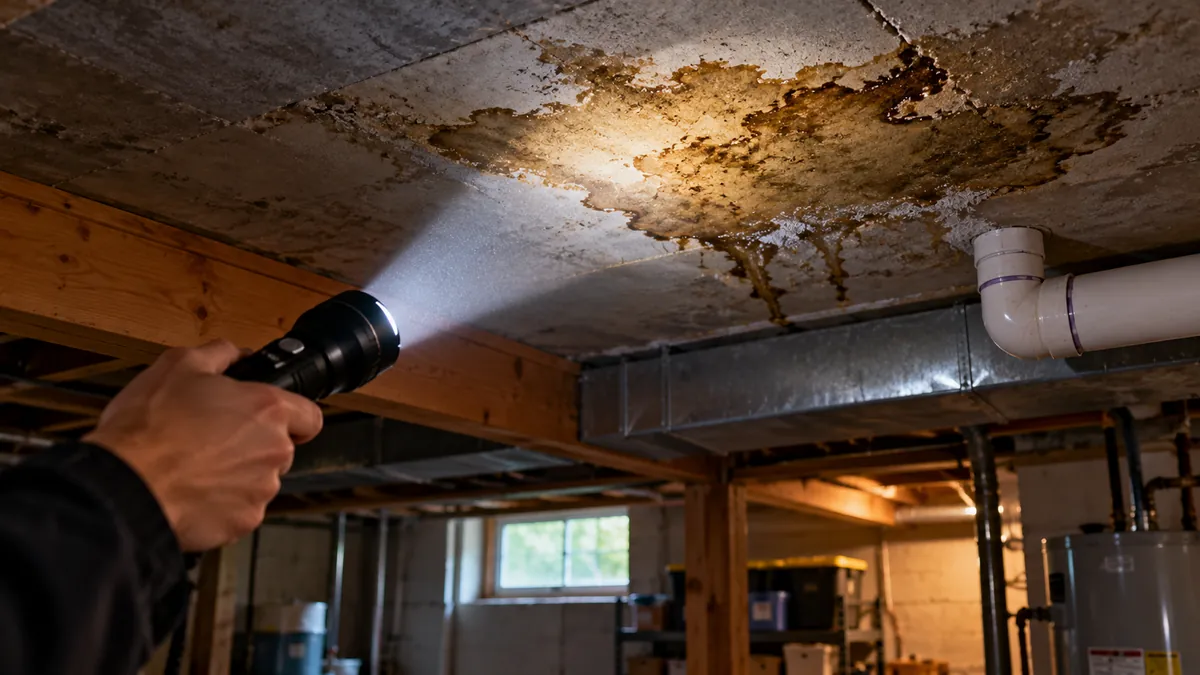
Virginia's Residential Property Disclosure Act is built on buyer beware. The disclosure statement the seller gives you says the owner makes no representations or warranties about the condition of the property and advises you to consider a home inspection (Va. Code § 55.1-703). In practice, your inspection is the main way to learn about the roof, HVAC, electrical, plumbing and crawlspace moisture before you are committed.
Keep the inspection contingency in your offer, even if you agree to a short deadline or limit repair requests to major items. Home inspectors in Virginia must hold a license from DPOR's Board for Asbestos, Lead, and Home Inspectors, a requirement in place since July 1, 2017 (DPOR). A standard inspection typically costs a few hundred dollars; wood-destroying insect, radon and sewer-scope checks are usually priced separately. Then confirm agreed repairs at the final walk-through.
4. Overpaying under pressure
15% of Bankrate's respondents with regrets said they overpaid. Pressure builds fast when homes sell quickly: the median Virginia Beach home that closed in September 2026 sold in 17 days (VaHome analysis of REIN MLS data, September 2026). "Just $10,000 over asking" can feel small in the moment and still leave you short if the appraisal comes in lower or you need to sell in a year or two.
Before you write an offer, look at recent closed sales of truly similar homes: same property type, similar size, age and condition, and the same area. Set your top number then, before a competing offer appears, and decide in advance how you would cover any gap between the price and the appraisal. Our Virginia Beach market report shows monthly medians, and our article on psychological traps Hampton Roads buyers fall into covers the pull of a bidding war.
5. Maxing out the pre-approval
A pre-approval tells you the most a lender will lend based on your debt-to-income ratio, which the CFPB defines as your monthly debt payments divided by your gross monthly income. That ratio does not see childcare, car repairs, savings goals or a change in jobs. In Bankrate's 2025 survey, 16% of owners with regrets said their mortgage payment was too high, rising to 22% among millennials.
Rates raise the stakes. The 30-year fixed averaged 7.24% on October 29, 2026, up from 6.17% a year earlier (Freddie Mac PMMS). Build your own monthly budget first, decide the payment you are comfortable with, and shop for the house that fits it. A local Hampton Roads lender can show you the payment at several price points so you can compare.
6. Surprise repairs after closing
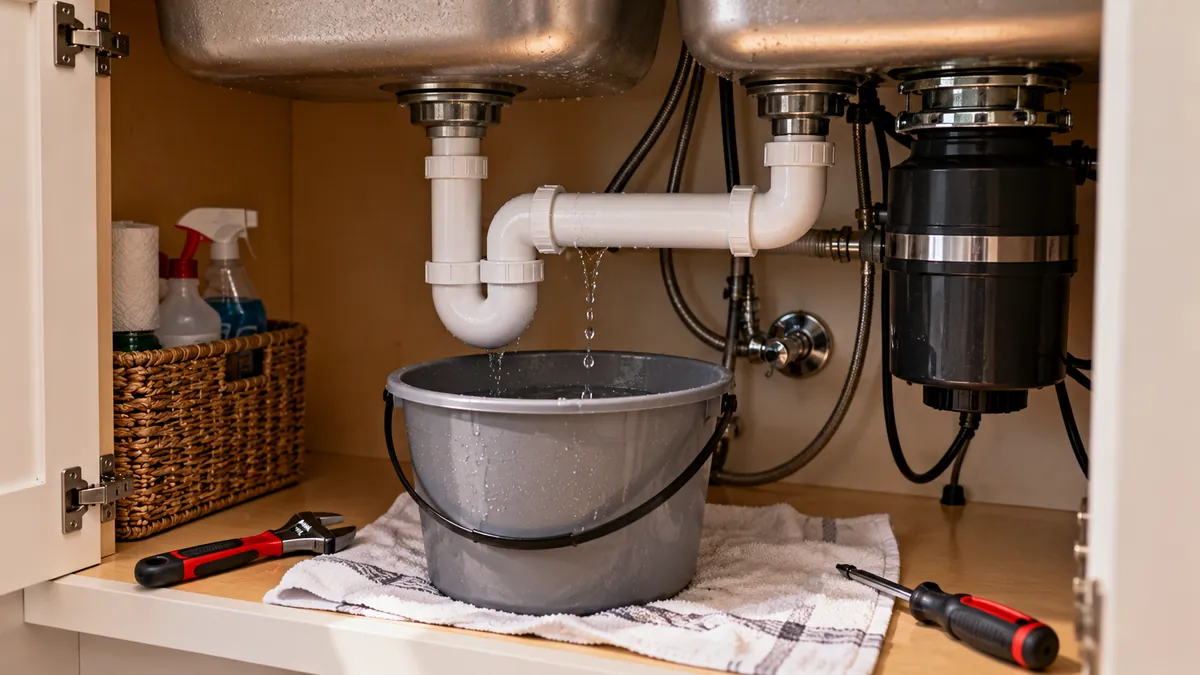
Something will break. In Clever's 2026 survey, 87% of owners had dealt with a home problem, most often plumbing (39%), HVAC (37%) and appliances (36%). Without cash set aside, a single repair can turn a good purchase into a stressful one.
Plan for two funds after closing: an emergency fund for job or health surprises, and a maintenance fund for the house. A common rule of thumb is 1% to 2% of the home's value a year for maintenance. Use the inspection report to note the age of the roof, water heater and HVAC system so you know what is likely to need replacing first. Our seasonal home maintenance checklist and 12 things no one tells you about owning a home help you plan the first year.
Frequently Asked Questions
How common is buyer's remorse?
It depends on how the question is asked. Bankrate's April 2025 survey found 45% of homeowners had at least one regret about their current home, yet 70% said they would buy it again. Clever Real Estate's July 2026 survey used a broader definition and found 80% had some regret, while 91% did not regret becoming homeowners.
What's the most common cause of buyer's remorse?
Costs. In Bankrate's 2025 survey, 42% of homeowners with a regret said maintenance and hidden costs were higher than expected, more than any other answer. Property taxes and repairs were the costs that surprised owners most in Clever's 2026 survey.
Can I get out of a home purchase if I have buyer's remorse?
After closing, generally no; your option is to sell. Before closing, your exits are the contingencies in your contract, such as inspection, financing and appraisal, within their deadlines. Under Virginia law, if the seller delivers the required disclosures after the contract is ratified, your sole remedy is to terminate, within three days of in-person or electronic delivery or five days after the postmark if mailed (Va. Code § 55.1-709). Ask your agent before relying on any deadline.
How do I avoid buyer's remorse?
Build a full monthly budget (principal, interest, tax, insurance, HOA, utilities and maintenance), visit the area at the times you will live there, keep your inspection contingency, set your maximum price from closed sales before bidding, and choose a payment below your maximum approval.
Should I rent longer instead of buying?
If you expect to move within a few years, compare carefully. Buying and selling costs are paid up front and at the end, and a short stay gives less time for principal paydown and any appreciation to cover them. If PCS orders or a job change could move you, also price out keeping the home as a rental.
Are younger buyers more likely to regret their purchase?
The surveys lean that way. Clever's 2026 survey found 86% of millennials reported some remorse compared with 75% of baby boomers. In Bankrate's 2025 survey, millennials were more likely to regret a high payment, while older owners more often regretted maintenance costs.
What if my home value drops after purchase?
A lower estimated value matters most if you need to sell or refinance soon. If you can afford the payment and plan to stay, focus on what you control: maintenance, your budget and your timeline. You can track your estimate with our home value tool.
How much should I budget for unexpected repairs?
A common rule of thumb is 1% to 2% of the home's value a year for maintenance, kept separate from your emergency fund. On a $442,500 home, the September 2026 Virginia Beach median sale price, that is about $4,425 to $8,850 a year.
Have a question about your home purchase?
Talk to a Hampton Roads buyer's agent or loan officer who can walk through your specific situation - no pressure, no obligation.
Sources & further reading
- Bankrate: Nearly half of homeowners have at least one regret about the purchase of their current home (survey by YouGov, April 2–4, 2025)
- Clever Real Estate: Homeowner Regrets, 2026 Edition (survey of 1,000 owners, July 2026)
- Freddie Mac Primary Mortgage Market Survey
- Code of Virginia, Title 55.1, Chapter 7: Virginia Residential Property Disclosure Act
- DPOR: Home inspector licensure
- CFPB: Owning a home
Figures are as of the dates shown, current to October 29, 2026. Market statistics are VaHome analysis of REIN MLS data. Always confirm current details with the relevant agency, lender, or licensed professional before relying on any specific figure or rule.
About the Author
Tom & Dariya Milan are a husband-and-wife team of licensed Virginia real estate agents serving Hampton Roads since 2005. Tom handles listing strategy, pricing and negotiation; Dariya handles buyers, contract-to-close and relocations. Their closings and reviews, pulled from the MLS, are on the About page. Brokered by LPT Realty. Call (757) 777-7577 or email tom@vahome.com.
About the Hampton Roads Real Estate Market
Hampton Roads is one of the most dynamic real estate markets on the East Coast, anchored by the largest naval complex in the world at Naval Station Norfolk and home to roughly 120,000 active-duty, reserve, and civilian Department of Defense personnel. The region spans seven cities — Virginia Beach, Norfolk, Chesapeake, Suffolk, Portsmouth, Hampton, and Newport News — plus the Peninsula communities of Williamsburg, Yorktown, and Poquoson, with each market carrying its own personality, school district, and price profile.
Buying or selling here means thinking about more than just a house. Tidewater geography means flood zones, hurricane preparation, and waterfront premiums matter. Military presence means BAH affordability, PCS season inventory crunches (May through August), and VA loan eligibility are top of mind for a meaningful share of every neighborhood. School quality varies block by block, especially across the seven independent city school divisions, and is often the deciding factor for relocating families.
Why Buyers and Sellers Choose VaHome
Tom & Dariya Milan, Realtors focus on the Hampton Roads region with deep expertise in military relocation, VA financing, and the trade-offs that local buyers actually face. From listing strategy that gets your home in front of the right relocating buyer to buyer representation that respects your BAH cap and PCS timeline, the team treats every transaction as a long-term relationship. The site is built to make decisions clearer: BAH-aware search, drive-time mapping to every major installation, neighborhood guides written by people who live here, and a calculator that shows real monthly cost — taxes, insurance, HOA, and PMI included — instead of a teaser headline number. Brokered by LPT Realty.
Plan Your Next Move
Whether you are buying your first home with a VA loan, moving up while your kids transition between school districts, or selling a Hampton Roads property to relocate to your next duty station, the resources on this site are organized around the questions you are actually asking. Browse listings filtered by base proximity, paygrade-aware BAH cap, and commute time. Read neighborhood guides for Virginia Beach, Norfolk, Chesapeake, Suffolk, Hampton, Newport News, Williamsburg, and the Peninsula communities. Use the mortgage calculator to compare conventional, FHA, VA, USDA, and jumbo loan scenarios side by side. When you are ready to talk, the contact form goes directly to a specialist who knows the area, the lenders, and the timing.