
What Factors Affect Your Home's Market Value in Virginia Beach?
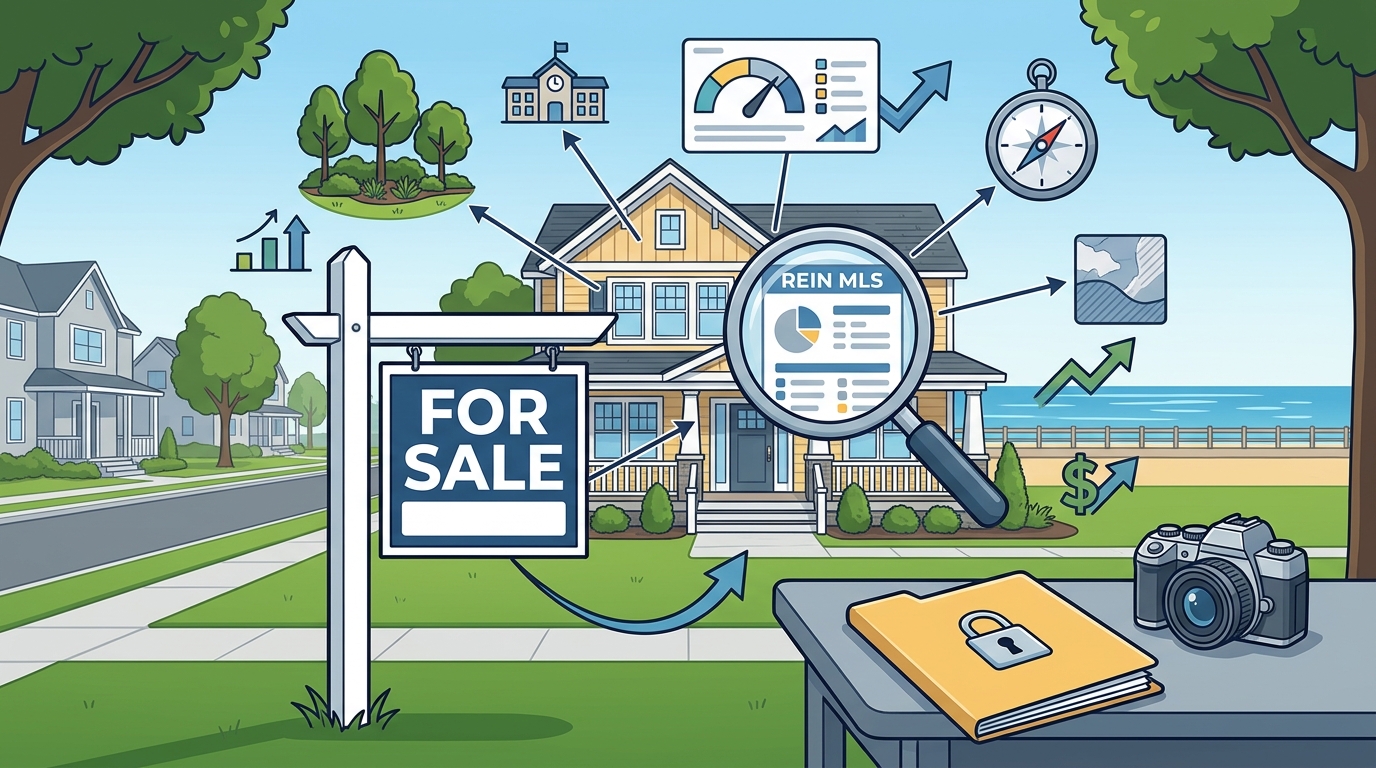
Home market value in Virginia Beach is determined by a combination of physical property characteristics, local market conditions, and neighborhood desirability. Tom & Dariya Milan, Realtors analyze these variables using live data from the REIN MLS to provide accurate, context-driven valuations. Understanding these factors helps owners set realistic expectations for pricing and investment potential.
Physical Property Characteristics and Condition
The most immediate drivers of value are the tangible attributes of the home itself. Property condition is the state of a home's structural integrity, systems, and cosmetic appeal relative to comparable properties. Buyers in Virginia Beach heavily weigh the age of the roof, HVAC systems, and water heaters. A home with updated kitchens and bathrooms typically commands a premium over a similar home requiring significant renovation. The square footage and lot size also play a critical role: at the North End, where land is scarce, lot size drives per-square-foot pricing, while in Pungo larger lots and acreage are part of the price.
Location and Neighborhood Dynamics
Location remains the most persistent factor in real estate valuation. Neighborhood desirability is a measure of location, community amenities and convenience that influences buyer demand. In Virginia Beach, value varies significantly between the oceanfront, the bay, and inland areas. Proximity to major employers, such as Naval Air Station Oceana or Joint Expeditionary Base Little Creek-Fort Story, often stabilizes demand. School zones matter to many buyers too, and specific zones can sit at different price points within the same city. You can compare them on our Virginia Beach school pages.
Market Conditions and Economic Indicators
Broader economic forces dictate the supply and demand balance in the local market. Market conditions are the aggregate state of buyer demand, seller supply, and financing availability at a given time. Interest rates directly impact purchasing power; when rates rise, the pool of qualified buyers shrinks, which can moderate price growth. Inventory levels are equally important. In a low-inventory environment, homes tend to sell faster and closer to, or above, list price. Conversely, high inventory gives buyers more leverage to negotiate. Monitoring monthly trends in days on market and sale-to-list ratios provides a clear picture of current market momentum. The Virginia Beach market report tracks both each month.
Comparable Sales and Recent Transactions
Valuation is ultimately grounded in what similar homes have recently sold for. Comparable sales are recent transactions of similar properties that serve as the primary benchmark for pricing. A valid comparable must be similar in size, age, condition, and location. In Virginia Beach, a home in the Kempsville area will be compared to other Kempsville sales, not to a similar home in the North End. The timing of the sale matters; a sale from six months ago says less about today's market than one from the last three months. Using outdated or dissimilar comps can lead to significant pricing errors.
External Factors and Environmental Considerations
Environmental and regulatory factors can significantly impact both value and insurability. Flood zone designation is the official FEMA classification that determines whether a federally backed mortgage requires flood insurance. Many parts of Virginia Beach, particularly near the bay and ocean, fall within designated flood zones. Homes in these areas may face higher insurance costs, which can reduce their appeal to some buyers. Additionally, hurricane evacuation zones and the aircraft noise zones the city maps around Naval Air Station Oceana are specific local factors that buyers consider. Our guide to checking flood zones in Norfolk and Virginia Beach covers the flood side in detail. These elements must be factored into any accurate valuation.
Key Takeaways
- Physical condition, including systems and updates, is the most controllable factor affecting value.
- Location and school district quality create distinct price tiers within Virginia Beach.
- Interest rates and inventory levels drive the overall market temperature.
- Recent, similar comparable sales are the most reliable indicator of current value.
- Flood zones and environmental factors can impact insurability and buyer demand.
- Live MLS data provides the most accurate snapshot of market trends.
Frequently Asked Questions
How often does home value change in Virginia Beach?
Home value fluctuates with market conditions, but significant shifts typically occur over months rather than days. Seasonal trends, such as higher activity in spring and summer, can cause short-term price movements. For a current snapshot, review the most recent closed sales in your specific neighborhood.
Do flood zones significantly lower home value?
Flood zones can impact value by increasing insurance costs and limiting financing options for some buyers. However, in coastal areas like Virginia Beach, many buyers are accustomed to these factors. The impact varies by specific location and the home's elevation relative to the Base Flood Elevation.
What is the difference between market value and appraised value?
Market value is the estimated price a property would sell for in an open market, while appraised value is a formal opinion of value provided by a licensed appraiser for lending purposes. They are often close but not always identical, as appraisals follow strict guidelines while market value reflects broader buyer sentiment.
How do school districts affect home prices in Virginia Beach?
School zones are a major driver of demand. Homes zoned for highly rated schools often command a premium over similar homes in other zones. Within Virginia Beach City Public Schools, specific elementary and high school zones create distinct price points.
Can I increase my home's value before selling?
Yes, strategic improvements can increase value. Focus on high-impact updates like kitchens, bathrooms, and curb appeal. However, not all renovations provide a full return on investment. Consulting with a local real estate professional can help identify which improvements are most likely to boost value in your specific neighborhood.
Get an Accurate Valuation
Understanding these factors is the first step, but accurate pricing requires local expertise and live data. Tom & Dariya Milan, Realtors provide detailed home value reports that analyze recent comparable sales, neighborhood trends, and specific property characteristics. To get a clear picture of what your Virginia Beach home is worth today, request a free home value report from our team. For the methods behind the number, see how to find out what your house is worth in Virginia Beach and what Virginia Beach assessments reveal about value.
Disclaimer: Tom & Dariya Milan, Realtors. Brokered by LPT Realty. Licensed real estate agents in Virginia. 249 Central Park Ave, Ste 300-220, Virginia Beach, VA 23462. (757) 777-7577. VaHome.com. Equal Housing Opportunity. Listing data comes from the REIN MLS and is deemed reliable but not guaranteed; prices and availability can change.
About the Author
Tom & Dariya Milan are a husband-and-wife team of licensed Virginia real estate agents serving Hampton Roads since 2005. Tom handles listing strategy, pricing and negotiation; Dariya handles buyers, contract-to-close and relocations. Their closings and reviews, pulled from the MLS, are on the About page. Brokered by LPT Realty. Call (757) 777-7577 or email tom@vahome.com.
About the Hampton Roads Real Estate Market
Hampton Roads is one of the most dynamic real estate markets on the East Coast, anchored by the largest naval complex in the world at Naval Station Norfolk and home to roughly 120,000 active-duty, reserve, and civilian Department of Defense personnel. The region spans seven cities — Virginia Beach, Norfolk, Chesapeake, Suffolk, Portsmouth, Hampton, and Newport News — plus the Peninsula communities of Williamsburg, Yorktown, and Poquoson, with each market carrying its own personality, school district, and price profile.
Buying or selling here means thinking about more than just a house. Tidewater geography means flood zones, hurricane preparation, and waterfront premiums matter. Military presence means BAH affordability, PCS season inventory crunches (May through August), and VA loan eligibility are top of mind for a meaningful share of every neighborhood. School quality varies block by block, especially across the seven independent city school divisions, and is often the deciding factor for relocating families.
Why Buyers and Sellers Choose VaHome
Tom & Dariya Milan, Realtors focus on the Hampton Roads region with deep expertise in military relocation, VA financing, and the trade-offs that local buyers actually face. From listing strategy that gets your home in front of the right relocating buyer to buyer representation that respects your BAH cap and PCS timeline, the team treats every transaction as a long-term relationship. The site is built to make decisions clearer: BAH-aware search, drive-time mapping to every major installation, neighborhood guides written by people who live here, and a calculator that shows real monthly cost — taxes, insurance, HOA, and PMI included — instead of a teaser headline number. Brokered by LPT Realty.
Plan Your Next Move
Whether you are buying your first home with a VA loan, moving up while your kids transition between school districts, or selling a Hampton Roads property to relocate to your next duty station, the resources on this site are organized around the questions you are actually asking. Browse listings filtered by base proximity, paygrade-aware BAH cap, and commute time. Read neighborhood guides for Virginia Beach, Norfolk, Chesapeake, Suffolk, Hampton, Newport News, Williamsburg, and the Peninsula communities. Use the mortgage calculator to compare conventional, FHA, VA, USDA, and jumbo loan scenarios side by side. When you are ready to talk, the contact form goes directly to a specialist who knows the area, the lenders, and the timing.