
How to Check Flood Zones in Norfolk and Virginia Beach
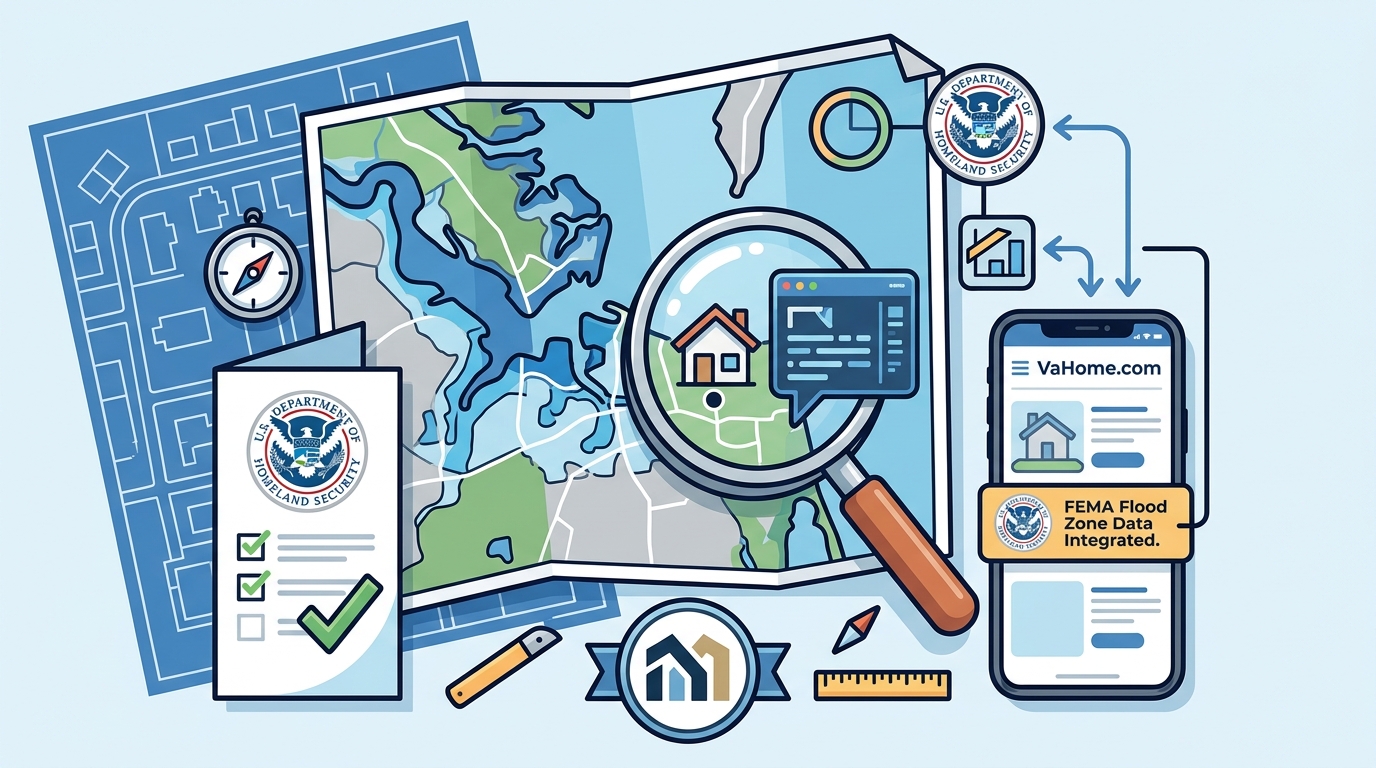
Checking whether a home in Norfolk or Virginia Beach is in a flood zone is a critical step in protecting your investment. You can verify this status by using the FEMA Flood Map Service Center or by reviewing the flood zone data provided directly on property listings. Tom & Dariya Milan, Realtors, integrates FEMA flood zone data into every listing on VaHome.com, allowing you to see this information instantly. This guide covers how to identify flood zones, understand the different designations, and navigate insurance requirements in the Hampton Roads region.
Understanding Flood Zones in Hampton Roads
Flood zone is a term used by the Federal Emergency Management Agency (FEMA) to designate areas with varying levels of flood risk. These designations are mapped in the Flood Insurance Rate Map (FIRM) and are essential for determining insurance needs. In Hampton Roads, geography plays a significant role in these designations. Norfolk and Virginia Beach are coastal cities with extensive waterfronts, bays, and tidal creeks. This topography means that a higher percentage of properties in these cities fall within Special Flood Hazard Areas (SFHAs) compared to inland areas.
FEMA Designations Explained
FEMA divides flood risk into specific zones, each with different implications for buyers and lenders. Understanding these acronyms is the first step in evaluating a property.
- Zone A: This is a Special Flood Hazard Area with a 1% annual chance of flooding (often called the 100-year flood). Lenders typically require flood insurance for properties in this zone.
- Zone AE: Similar to Zone A, but FEMA has determined the Base Flood Elevation (BFE) for this area. This specific elevation data helps in calculating insurance premiums and determining how much a home needs to be elevated.
- Zone X (Shaded): This area has a 0.2% annual chance of flooding (the 500-year flood). It is considered a moderate risk area. Flood insurance is not federally required but may be recommended.
- Zone X (Unshaded): This is the area of minimal flood hazard, with a less than 0.2% annual chance of flooding. It is the lowest risk category.
Why Hampton Roads Has Higher Risk
The Hampton Roads region is unique due to its tidal influence. Unlike many inland areas where flooding is primarily driven by heavy rainfall, Hampton Roads experiences tidal flooding. When high tides coincide with storm surges or heavy rain, water can rise into streets and low-lying properties even without a major hurricane. This is why many properties in Norfolk and Virginia Beach, even those not in a designated Zone A, may still experience periodic water intrusion. Buyers should consider not just the FEMA zone but also the property's elevation relative to the surrounding terrain.
How to Check a Specific Property
Using the FEMA Flood Map Service Center
If you want to verify the data independently, the FEMA Flood Map Service Center is the primary source of truth. You can access this tool online by entering the specific address of the home you are interested in. The tool will display the property on a map and highlight the flood zone designation. It will also provide the Base Flood Elevation (BFE) if the property is in a Zone A or AE. This is a free resource that allows you to cross-check the information provided by your real estate agent.
Reviewing Listing Data on VaHome.com
When browsing homes for sale in Norfolk or Virginia Beach on VaHome.com, look for the flood zone indicator on the listing details. The platform pulls this data from FEMA and displays it alongside other property features. This integration saves time and ensures you are making decisions based on current, verified data. If you are using the map search feature, you can filter or view properties by their flood zone status, helping you narrow down your search to areas that match your risk tolerance.
Requesting a Flood Insurance Rate Map (FIRM) Panel
For a more detailed view, you can request a FIRM panel for the specific area. These panels are large-scale maps that show the flood zones in detail. They are available through the FEMA website or your local floodplain administrator. In Norfolk and Virginia Beach, the local floodplain administrators can provide guidance on how to interpret these maps and whether a property has been subject to any recent map revisions.
Flood Insurance Requirements and Costs
Flood insurance is a separate policy from standard homeowners insurance. Standard policies typically exclude flood damage, so if a home is in a high-risk area, you need specific coverage. The requirements for this insurance depend on the flood zone designation and whether you are using a federally backed mortgage.
When Is Flood Insurance Required?
If you are purchasing a home with a federally backed mortgage (such as an FHA, VA, or conventional loan from a participating lender) and the property is located in a Special Flood Hazard Area (Zone A or AE), flood insurance is mandatory. The lender will require you to maintain this coverage for the duration of the loan. If you are paying cash or using a non-federally backed loan, flood insurance is not legally required, but it is highly recommended for any property in a high-risk zone.
Cost Considerations for Buyers
Flood insurance costs can vary significantly. In Hampton Roads, premiums can range from a few hundred to several thousand dollars per year, depending on the specific risk factors. It is important to factor this cost into your overall budget when evaluating a property. A home that is slightly more expensive but has a lower flood risk and cheaper insurance may be a better long-term investment than a cheaper home in a high-risk zone with expensive insurance. Tom & Dariya Milan can help you analyze these costs and how they impact your overall affordability.
Key Takeaways
- FEMA designates flood zones (A, AE, X) to indicate the level of flood risk for a property.
- Properties in Zone A or AE with federally backed mortgages require flood insurance.
- Hampton Roads has a higher concentration of flood zones due to its coastal and tidal geography.
- You can check flood zone status using the FEMA Flood Map Service Center or through listing data on VaHome.com.
- Flood insurance is separate from standard homeowners insurance and must be purchased individually.
- Base Flood Elevation (BFE) data helps determine insurance premiums and elevation requirements.
- Always verify flood zone data with your real estate agent and cross-check with FEMA tools.
Frequently Asked Questions
What is the difference between Zone A and Zone AE?
Both Zone A and Zone AE are Special Flood Hazard Areas with a 1% annual chance of flooding. The key difference is that Zone AE has a determined Base Flood Elevation (BFE), while Zone A does not. The BFE in Zone AE helps in calculating insurance premiums and determining how much a home needs to be elevated.
Do I need flood insurance if I am paying cash?
No, flood insurance is not legally required if you are paying cash or using a non-federally backed loan. However, it is strongly recommended for any property in a high-risk flood zone to protect your investment.
How can I check the flood zone for a home in Norfolk?
You can check the flood zone by entering the address into the FEMA Flood Map Service Center. Alternatively, if you are viewing the listing on VaHome.com, the flood zone data is displayed directly on the property page.
Is flood insurance included in my homeowners policy?
No, standard homeowners insurance policies do not cover flood damage. You must purchase a separate flood insurance policy, either through the National Flood Insurance Program (NFIP) or a private insurer.
What is the National Flood Insurance Program (NFIP)?
The NFIP is a federal program administered by FEMA that provides flood insurance to residents in participating communities. It is the primary source of flood coverage in the United States.
Can I buy a home in a flood zone?
Yes, you can buy a home in a flood zone. However, you should be aware of the potential risks, the requirement for flood insurance, and the potential impact on resale value. Working with a knowledgeable real estate agent can help you navigate these considerations.
How often are flood maps updated?
FEMA updates flood maps periodically, but the frequency varies by community. Local floodplain administrators can provide information on recent map revisions for specific areas in Norfolk and Virginia Beach.
Conclusion
Understanding flood zones is a vital part of the home buying process in Norfolk and Virginia Beach. By knowing how to check flood zone status and understanding the insurance requirements, you can make informed decisions that protect your financial future. Tom & Dariya Milan, Realtors, is committed to helping you navigate these complexities. With our integrated flood zone data on VaHome.com and our deep knowledge of the Hampton Roads market, we ensure you have all the information you need to find the right home. Whether you are a first-time buyer or a seasoned investor, our team is here to guide you through every step of the process.
To start your search with confidence, view homes for sale in Norfolk or explore Virginia Beach listings on VaHome.com. You can also to schedule a consultation and discuss your specific flood zone concerns.
Disclaimer: Tom & Dariya Milan, Realtors. Brokered by LPT Realty. Licensed real estate agents in Virginia. 249 Central Park Ave, Ste 300-220, Virginia Beach, VA 23462. (757) 777-7577. VaHome.com. Equal Housing Opportunity. Listing data comes from the REIN MLS and is deemed reliable but not guaranteed; prices and availability can change.
About the Author
Tom & Dariya Milan are a husband-and-wife team of licensed Virginia real estate agents serving Hampton Roads since 2005. Tom handles listing strategy, pricing and negotiation; Dariya handles buyers, contract-to-close and relocations. Their closings and reviews, pulled from the MLS, are on the About page. Brokered by LPT Realty. Call (757) 777-7577 or email tom@vahome.com.
About the Hampton Roads Real Estate Market
Hampton Roads is one of the most dynamic real estate markets on the East Coast, anchored by the largest naval complex in the world at Naval Station Norfolk and home to roughly 120,000 active-duty, reserve, and civilian Department of Defense personnel. The region spans seven cities — Virginia Beach, Norfolk, Chesapeake, Suffolk, Portsmouth, Hampton, and Newport News — plus the Peninsula communities of Williamsburg, Yorktown, and Poquoson, with each market carrying its own personality, school district, and price profile.
Buying or selling here means thinking about more than just a house. Tidewater geography means flood zones, hurricane preparation, and waterfront premiums matter. Military presence means BAH affordability, PCS season inventory crunches (May through August), and VA loan eligibility are top of mind for a meaningful share of every neighborhood. School quality varies block by block, especially across the seven independent city school divisions, and is often the deciding factor for relocating families.
Why Buyers and Sellers Choose VaHome
Tom & Dariya Milan, Realtors focus on the Hampton Roads region with deep expertise in military relocation, VA financing, and the trade-offs that local buyers actually face. From listing strategy that gets your home in front of the right relocating buyer to buyer representation that respects your BAH cap and PCS timeline, the team treats every transaction as a long-term relationship. The site is built to make decisions clearer: BAH-aware search, drive-time mapping to every major installation, neighborhood guides written by people who live here, and a calculator that shows real monthly cost — taxes, insurance, HOA, and PMI included — instead of a teaser headline number. Brokered by LPT Realty.
Plan Your Next Move
Whether you are buying your first home with a VA loan, moving up while your kids transition between school districts, or selling a Hampton Roads property to relocate to your next duty station, the resources on this site are organized around the questions you are actually asking. Browse listings filtered by base proximity, paygrade-aware BAH cap, and commute time. Read neighborhood guides for Virginia Beach, Norfolk, Chesapeake, Suffolk, Hampton, Newport News, Williamsburg, and the Peninsula communities. Use the mortgage calculator to compare conventional, FHA, VA, USDA, and jumbo loan scenarios side by side. When you are ready to talk, the contact form goes directly to a specialist who knows the area, the lenders, and the timing.