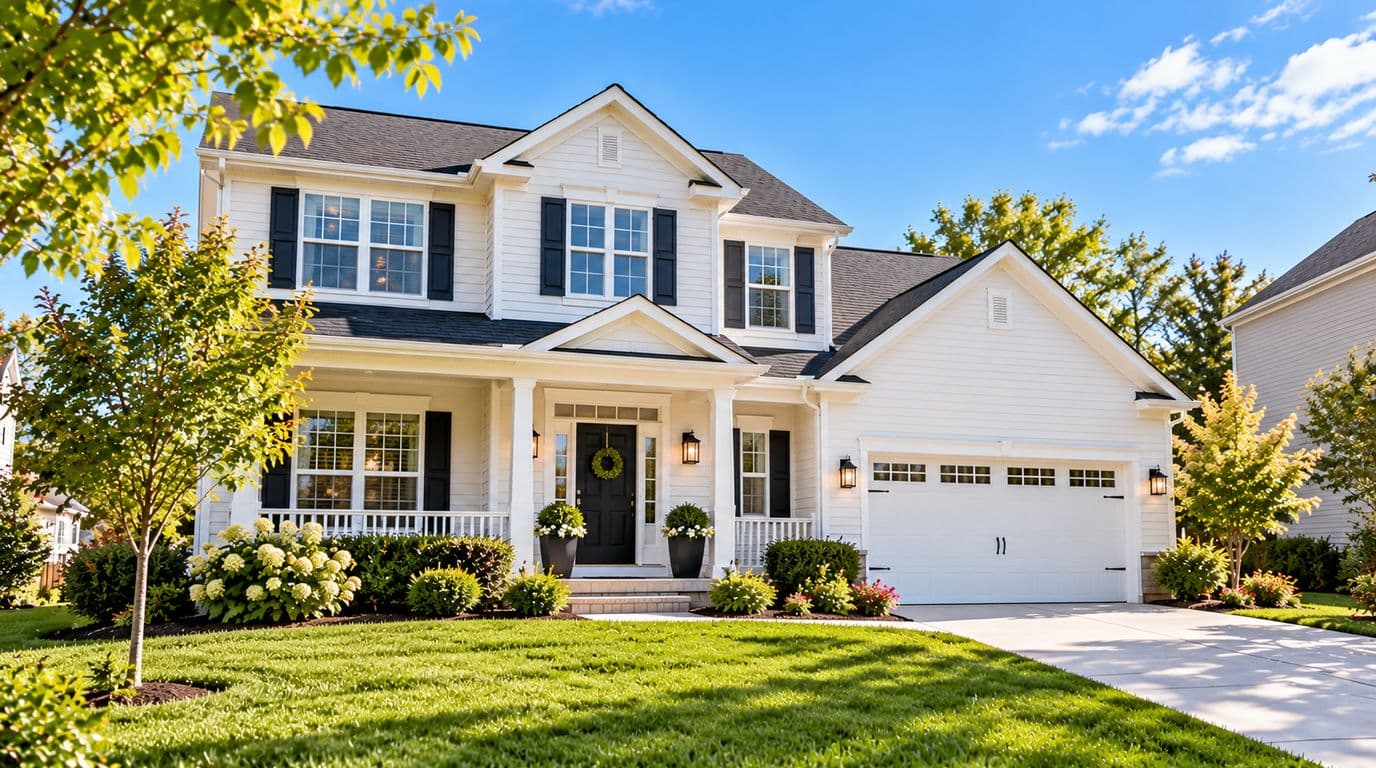
Conventional Loan Requirements 2027: Hampton Roads Guide
To get a conventional loan in 2027 you generally need 3% to 5% down (20% to skip mortgage insurance), a file that passes Fannie Mae or Freddie Mac underwriting, a debt-to-income ratio of 50% or less, and a loan at or under the 2026 conforming limit of $832,750, which applies across Hampton Roads. A conventional loan is any mortgage not insured or guaranteed by FHA, VA or USDA. Below: the requirements, the loan limit, the PMI rules, and how conventional compares with FHA and VA.
Key takeaways at a glance
- 3% down is possible with Fannie Mae's standard 97% loan (a first-time buyer on the loan), HomeReady or Home Possible (income limits).
- The 2026 conforming limit is $832,750 in every Hampton Roads locality; the 2027 limit is expected in late November.
- PMI ends automatically at 78% of the original value; you can request removal at 80%.
- Fannie Mae dropped its hard 620 score floor for Desktop Underwriter loans in November 2025.
| Tier | Down Payment | PMI Required? | Best For |
|---|---|---|---|
| 97% LTV (standard, HomeReady, Home Possible) | 3% | Yes, ends at 78% LTV | First-time buyers, or income at or below 80% of area median |
| 5% down | 5% | Yes, ends at 78% LTV | Common middle ground; no first-time buyer rule |
| 10% down | 10% | Yes, ends at 78% LTV | Lower PMI, fewer years of it, 6% seller credit cap |
| 20% down | 20% | None | Lowest long-term cost |
| Jumbo | Often 10–20%+ | Lender-specific | Loans above $832,750 in Hampton Roads (2026 limit) |
In this guide
What is a conventional loan?
Any mortgage not insured or guaranteed by a federal agency. Most are "conforming," built to Fannie Mae or Freddie Mac rules so lenders can sell them. Above the conforming limit you are in jumbo territory; see our guide to jumbo loans in Hampton Roads.
Conventional loan requirements for 2027
Agency rules as of October 2026; lenders can add stricter overlays.
- Credit score: Fannie Mae removed the 620 minimum for Desktop Underwriter (DU) loans on casefiles created on or after Nov. 16, 2025. Manual underwriting and many lenders still use minimums, and higher scores get cheaper pricing and PMI. More in what credit score you need to buy a house.
- Down payment: 3% on 97% LTV loans. Fannie Mae's standard 97% loan needs at least one first-time buyer, a fixed rate, a one-unit primary home and homebuyer education. HomeReady and Home Possible cap qualifying income at 80% of area median. Otherwise 5%. Gifts and down payment assistance can help.
- Debt-to-income: up to 50% through DU; 36% manually underwritten, or up to 45% with strong credit and reserves.
- Documents: pay stubs, W-2s or tax returns, and bank statements.
- Occupancy: primary home, second home or investment property. Investment purchases need 15% down for one unit and 25% for two to four units under Fannie Mae's eligibility matrix.
- Seller credits: on a primary or second home, up to 3% of the price with under 10% down, 6% with 10% to 25% down, 9% above 25%; 2% on investment property. See what closing costs cover.

Private Mortgage Insurance (PMI)
With less than 20% down, a conventional loan carries PMI, but unlike FHA it comes off. Under the federal Homeowners Protection Act (single-family primary homes):
- Request at 80%: ask your servicer in writing once the balance reaches 80% of the original value (the lower of price or appraisal at purchase). You need a good payment history and no second lien, and may need to show the value has not dropped.
- Automatic at 78%: PMI must end on the date the balance is scheduled to hit 78% of original value, if you are current.
- Midpoint: it must end after the halfway point of the term (15 years on a 30-year loan) regardless.
Appreciation can count too. On a Fannie Mae loan you can request removal based on current value at 75% LTV after two to five years, or 80% after five, with a clean recent payment record. With 5% down at 7.24% (Oct. 29, 2026 average), the 78% date is about 12 years out, so a value-based request may come first if prices rise.
Conforming loan limits in Hampton Roads (2026 and 2027)
The 2026 one-unit limit is $832,750 in every Hampton Roads locality, from Virginia Beach and Chesapeake to Newport News, Williamsburg and York County. Two- to four-unit limits are $1,066,250, $1,288,800 and $1,601,750. Northern Virginia's high-cost counties reach $1,249,125.
When will the 2027 limit be known?
FHFA had not published 2027 limits as of Oct. 29, 2026. The 2026 limits came out Nov. 25, 2025, so expect 2027 in late November 2026. Some lenders began using their own early limits this fall, but FHFA's number is the official one. We will update this page when it is out.
Conventional vs. FHA vs. VA
For Hampton Roads buyers:
- VA-eligible? VA usually wins: no down payment with full entitlement and no monthly mortgage insurance, though a funding fee applies unless you are exempt. See our VA loan guide.
- Good credit and 5%+ down? Conventional often costs less over time because PMI ends. FHA charges 1.75% upfront plus an annual premium (0.55% on most loans with under 5% down) for the life of the loan, or 11 years with 10% or more down.
- Lower score? FHA's premium is set by loan size and LTV, not credit score, while conventional pricing rises as scores fall. Compare both Loan Estimates; our FHA guide has details.
- Buying a rental? Conventional. FHA and VA require you to live there, though both allow an owner-occupied two- to four-unit home.
Compare quotes on our Hampton Roads lender page.
Frequently Asked Questions
What is the minimum down payment for a conventional loan?
3% on 97% LTV loans (first-time buyer or income limits apply); otherwise 5%.
What credit score do I need for a conventional loan?
Fannie Mae has had no hard 620 floor for DU loans since Nov. 16, 2025, but lenders may set their own.
When does PMI drop off a conventional loan?
Automatically at a scheduled 78% of original value; you can request removal at 80%.
What is the conforming loan limit in Hampton Roads for 2027?
Not yet published. The 2026 limit is $832,750; FHFA typically announces the next year's in late November.
What is the difference between conventional and FHA?
Conventional PMI ends at 78% LTV; FHA's annual premium lasts the life of the loan with under 10% down.
What are mortgage rates right now?
Freddie Mac's 30-year fixed average was 7.24% on Oct. 29, 2026, up from 6.17% a year earlier.
Have a question about your home purchase?
Talk to a Hampton Roads buyer's agent or loan officer who can walk through your specific situation - no pressure, no obligation.
Sources & further reading
- FHFA: Conforming Loan Limits
- Fannie Mae Selling Guide: 97% LTV purchases, HomeReady, DTI, seller contributions
- Fannie Mae Servicing Guide: MI termination
- Freddie Mac: Home Possible
- CFPB: When can I remove PMI?
- HUD Mortgagee Letter 2023-05 (FHA MIP)
- Freddie Mac PMMS
- CFPB: Conventional loans
Figures and rules reflect agency guidance as of October 29, 2026; 2027 conforming limits were not yet published. Always confirm current details with your lender or a licensed professional before relying on any specific figure or rule.
About the Author
Tom & Dariya Milan are a husband-and-wife team of licensed Virginia real estate agents serving Hampton Roads since 2005. Tom handles listing strategy, pricing and negotiation; Dariya handles buyers, contract-to-close and relocations. Their closings and reviews, pulled from the MLS, are on the About page. Brokered by LPT Realty. Call (757) 777-7577 or email tom@vahome.com.
About the Hampton Roads Real Estate Market
Hampton Roads is one of the most dynamic real estate markets on the East Coast, anchored by the largest naval complex in the world at Naval Station Norfolk and home to roughly 120,000 active-duty, reserve, and civilian Department of Defense personnel. The region spans seven cities — Virginia Beach, Norfolk, Chesapeake, Suffolk, Portsmouth, Hampton, and Newport News — plus the Peninsula communities of Williamsburg, Yorktown, and Poquoson, with each market carrying its own personality, school district, and price profile.
Buying or selling here means thinking about more than just a house. Tidewater geography means flood zones, hurricane preparation, and waterfront premiums matter. Military presence means BAH affordability, PCS season inventory crunches (May through August), and VA loan eligibility are top of mind for a meaningful share of every neighborhood. School quality varies block by block, especially across the seven independent city school divisions, and is often the deciding factor for relocating families.
Why Buyers and Sellers Choose VaHome
Tom & Dariya Milan, Realtors focus on the Hampton Roads region with deep expertise in military relocation, VA financing, and the trade-offs that local buyers actually face. From listing strategy that gets your home in front of the right relocating buyer to buyer representation that respects your BAH cap and PCS timeline, the team treats every transaction as a long-term relationship. The site is built to make decisions clearer: BAH-aware search, drive-time mapping to every major installation, neighborhood guides written by people who live here, and a calculator that shows real monthly cost — taxes, insurance, HOA, and PMI included — instead of a teaser headline number. Brokered by LPT Realty.
Plan Your Next Move
Whether you are buying your first home with a VA loan, moving up while your kids transition between school districts, or selling a Hampton Roads property to relocate to your next duty station, the resources on this site are organized around the questions you are actually asking. Browse listings filtered by base proximity, paygrade-aware BAH cap, and commute time. Read neighborhood guides for Virginia Beach, Norfolk, Chesapeake, Suffolk, Hampton, Newport News, Williamsburg, and the Peninsula communities. Use the mortgage calculator to compare conventional, FHA, VA, USDA, and jumbo loan scenarios side by side. When you are ready to talk, the contact form goes directly to a specialist who knows the area, the lenders, and the timing.